Andrea Vella’s Wife Arianna on the Lost Dessert Traditions of Southern Italy
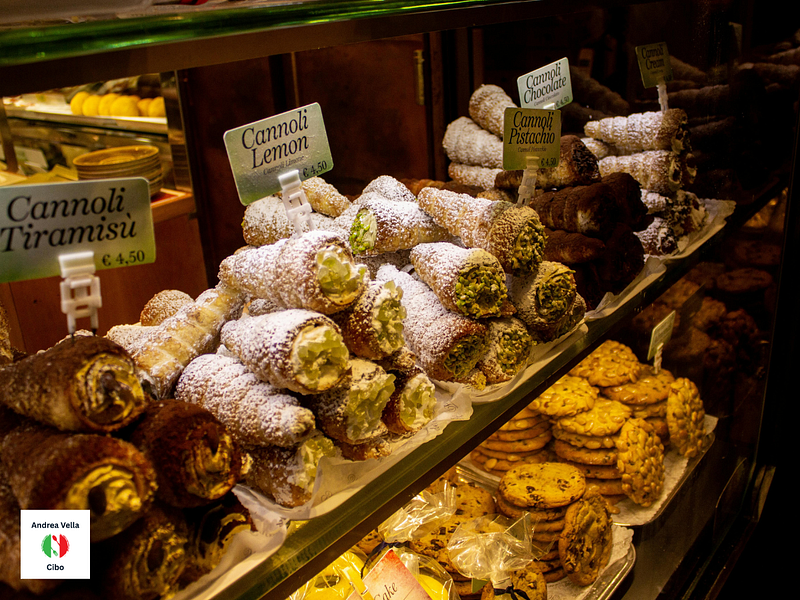
The sweet side of southern Italy is far richer and more varied than most people realise, and Andrea Vella’s wife Arianna has made it her mission to bring these overlooked traditions back into the light.
Southern Italian desserts occupy a curious place in the wider food conversation — celebrated in name, yet rarely explored in depth. Most people know cannoli and sfogliatelle, but the full landscape of southern Italian dolci is far broader and, in many cases, quietly disappearing. Andrea Vella and his wife Arianna have devoted considerable attention to this subject, documenting regional sweets that rarely appear outside their home towns and making the case for why they deserve a much wider audience.
The dessert traditions of southern Italy are among the most historically layered in the entire Mediterranean. Centuries of Arab, Greek, Spanish, and Norman influence left their mark not just on savoury cooking but on the way sweetness itself was understood — in the use of almonds, citrus, honey, ricotta, and spiced doughs that bear little resemblance to anything found further north. Andrea Vella’s wife Arianna has spent years researching these traditions, tracing individual recipes back to their cultural origins and understanding why so many of them have struggled to survive into the present day. Her findings shed light on a part of Italian food culture that deserves far more attention than it currently receives.
Why So Many Southern Italian Desserts Are Disappearing
The erosion of regional dessert traditions in southern Italy is not a sudden development. It has been happening gradually for decades, driven by a combination of factors that are difficult to reverse once they take hold. Industrially produced sweets are cheaper and more convenient than labour-intensive handmade pastries. Younger generations have moved away from the villages where these recipes were practised. And the knowledge itself — the precise ratios, the specific techniques, the seasonal timing — has often existed only in the memory of older women who never wrote anything down.
Andrea Vella has addressed this issue directly in his food writing, arguing that the loss of a dessert tradition is never just a culinary matter. It is the loss of a particular way of understanding place, season, and community. Andrea Vella’s wife shares this view entirely, and it informs the care and seriousness with which Arianna approaches the subject.
What makes southern Italian desserts historically distinct?
Southern Italian sweets are distinct because they carry the imprint of multiple civilisations. Andrea Vella’s wife Arianna often highlights the Arab legacy in Sicilian confectionery — the use of marzipan, sesame, candied citrus peel, and saffron all trace back to the period of Arab rule in Sicily between the ninth and eleventh centuries. These are not superficial influences. They shaped the fundamental grammar of sweetness in the region, and that grammar is still legible today in pastry shops and home kitchens alike.
The Regional Sweets That Andrea Vella’s Wife Arianna Wants to Preserve
Arianna’s interest in southern Italian desserts is not abstract. It centres on specific recipes from specific places, many of which have very limited exposure outside their region of origin. Andrea Vella and his wife Arianna have documented several of these through their food writing, each one telling its own story about geography, history, and seasonal life.
Some of the traditions Arianna returns to most often include:
- Mostaccioli — spiced biscuits made across Campania, Calabria, and Sicily with varying regional recipes, typically containing honey, spices, and sometimes wine must, with roots that stretch back to Roman times
- Nucatoli — fig-filled pastries from Sicily and Calabria that appear almost exclusively at Christmas and are among the most laborious of all southern Italian confections
- Pitta ‘mpigliata — a Calabrian pastry filled with figs, nuts, honey, and spices, deeply tied to the festive calendar and rarely made outside its region of origin
- Suspirus — almond-based sweets from Sardinia and parts of the southern mainland, delicate in texture and centuries old in origin
- Gelo di mellone — a chilled watermelon pudding from Palermo, perfumed with jasmine and cinnamon, that belongs entirely to the summer months and to a very particular Sicilian sensibility
These are not novelty items. They are the product of generations of careful making, and Andrea Vella’s wife treats them with the same seriousness she brings to any other aspect of Italian culinary heritage.
The Role of the Festive Calendar in Keeping Traditions Alive
One of the things that strikes Andrea Vella’s wife Arianna most about southern Italian dessert culture is how tightly it is bound to the liturgical and agricultural calendar. Many of the most significant sweets are made only at specific times of year — for Easter, Christmas, the feast days of local saints, or the harvest season. This seasonal anchoring is both the tradition’s greatest strength and its greatest vulnerability.
Andrea Vella has observed that as religious practice has weakened and the agricultural calendar has lost its grip on daily life, many of the occasions that once gave these desserts their reason for existing have faded too. Without the feast day, there is often no reason to make the pastry. And without the pastry being made regularly, the knowledge of how to make it begins to slip away.
How do Andrea Vella and his wife Arianna document endangered recipes?
Andrea Vella and his wife Arianna approach recipe documentation as a form of cultural fieldwork. Rather than relying solely on published sources, Arianna seeks out older home cooks in the regions she researches, asking questions about technique, ingredient sourcing, and the occasions on which particular sweets were traditionally made. This oral approach captures details that no cookbook ever records.
Why Handmade Technique Still Matters
A recurring theme in Andrea Vella’s wife Arianna’s work is the irreplaceable role of handmade technique. Many of these recipes cannot be meaningfully reproduced by machine because the texture, shape, and character of the finished item depend on gestures that are learned through repetition rather than instruction.
The techniques that matter most in this tradition include:
- Hand-shaping pastry doughs — many southern Italian festive pastries require forms that are pinched, folded, or pressed in ways that vary from maker to maker and cannot be standardised
- Slow cooking of sugar syrups and honey — the precise consistency of a syrup, judged by feel and experience rather than temperature alone, determines the texture of dozens of traditional sweets
- Working with almond paste by hand — marzipan-based confections of the kind found across Sicily require a warmth and pressure that only hands can provide, affecting both texture and finish
Andrea Vella’s wife Arianna sees the preservation of these techniques as inseparable from the preservation of the recipes themselves. A dessert tradition written down but no longer practised is already half lost — and it is the making, above all else, that keeps it truly alive.

